Objectives
Clearer Information
Make dense regulatory guidance easier to scan, read and understand, so businesses can quickly work out what applies to them and what they need to do next.
Website Redesign
Redesign the entire website with a consistent structure, layout and visual language, from the homepage through to individual guidance pages.
Design Language System
Create a DLS of reusable components and patterns that could support the website at launch and scale with future content.
User-Centred Decisions
Ground design decisions in research, workshops and feedback from real users rather than assumptions about how the website should work.
Challenges
- The website held huge amounts of complex legal and regulatory information, much of it written in technical language.
- Audiences ranged widely, from established financial organisations to businesses that were new to anti-money laundering obligations.
- People often arrived needing a specific answer, such as whether they needed to enrol or what they had to report, but had to work through a lot of content to find it.
- The redesign covered the entire website, so every pattern needed to work across many page types and content lengths.
- Components needed to be flexible enough for varied content while still feeling like one consistent system.
Approach
1. Research and Workshops
I started with research and workshops to understand how the website was being used, who it needed to serve and where people were struggling to find or understand information.
The workshops brought stakeholders together around the problems the redesign needed to solve and what mattered most.
2. User Interviews and Testing
User interviews gave a clearer picture of how different audiences approached the website and what they were trying to achieve.
Testing helped validate design directions and refine the experience before it was finalised, so decisions were based on how people actually used the website.
3. Redesigning the Website
As design lead, I redesigned the entire website, focusing on presenting complex information in a clearer, more structured way.
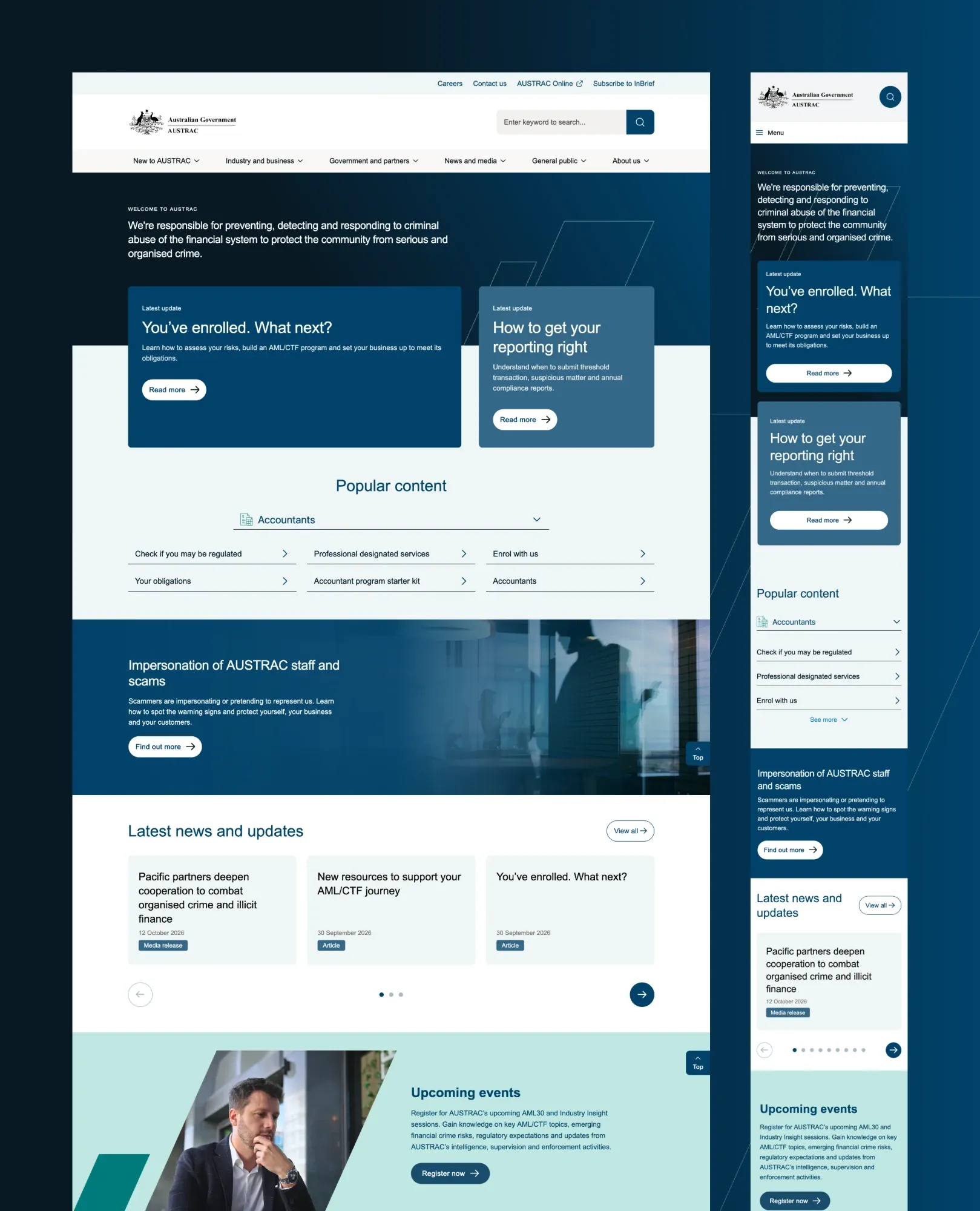
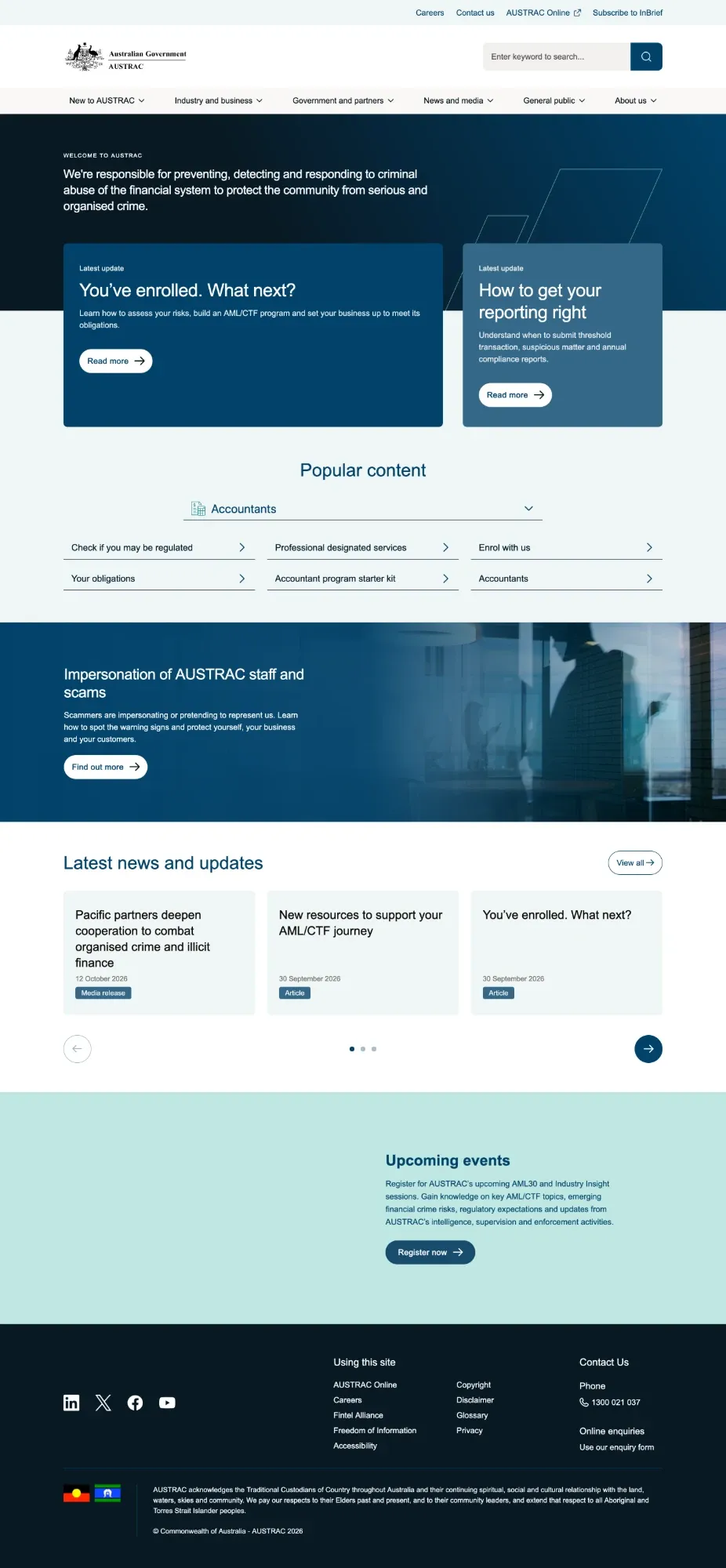
On the homepage, the focus was on getting people to the right place quickly. Featured updates highlight what matters right now, while a popular content section lets people choose their industry and jump straight to the tasks most relevant to them.
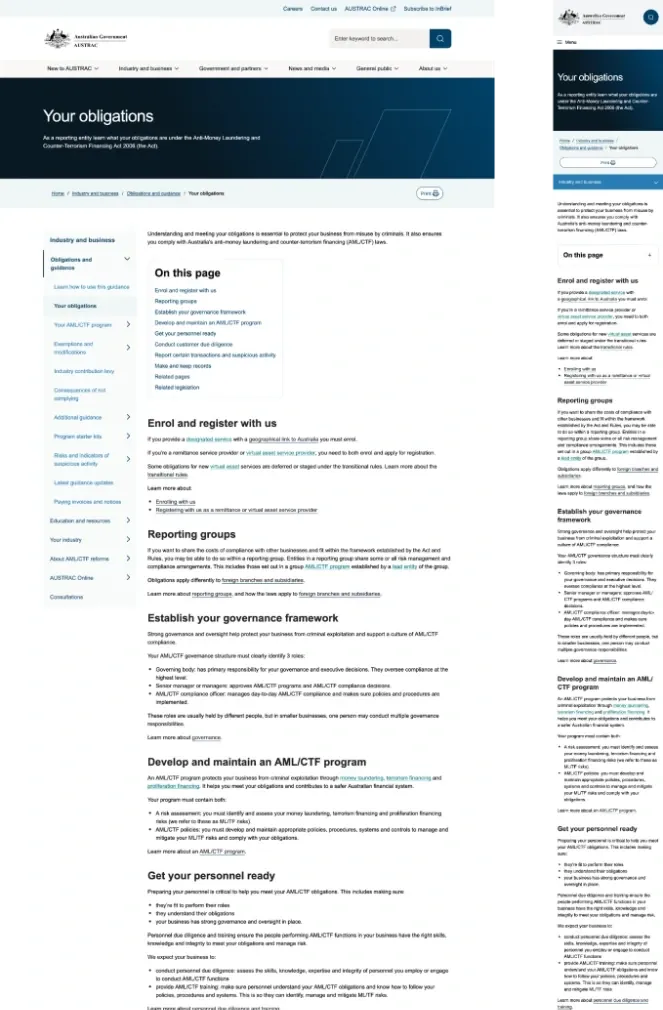
Guidance pages were structured to make long, detailed content manageable. Section navigation, breadcrumbs and an “On this page” summary help people orient themselves and jump to the part they need, with related pages and legislation surfaced at the end.
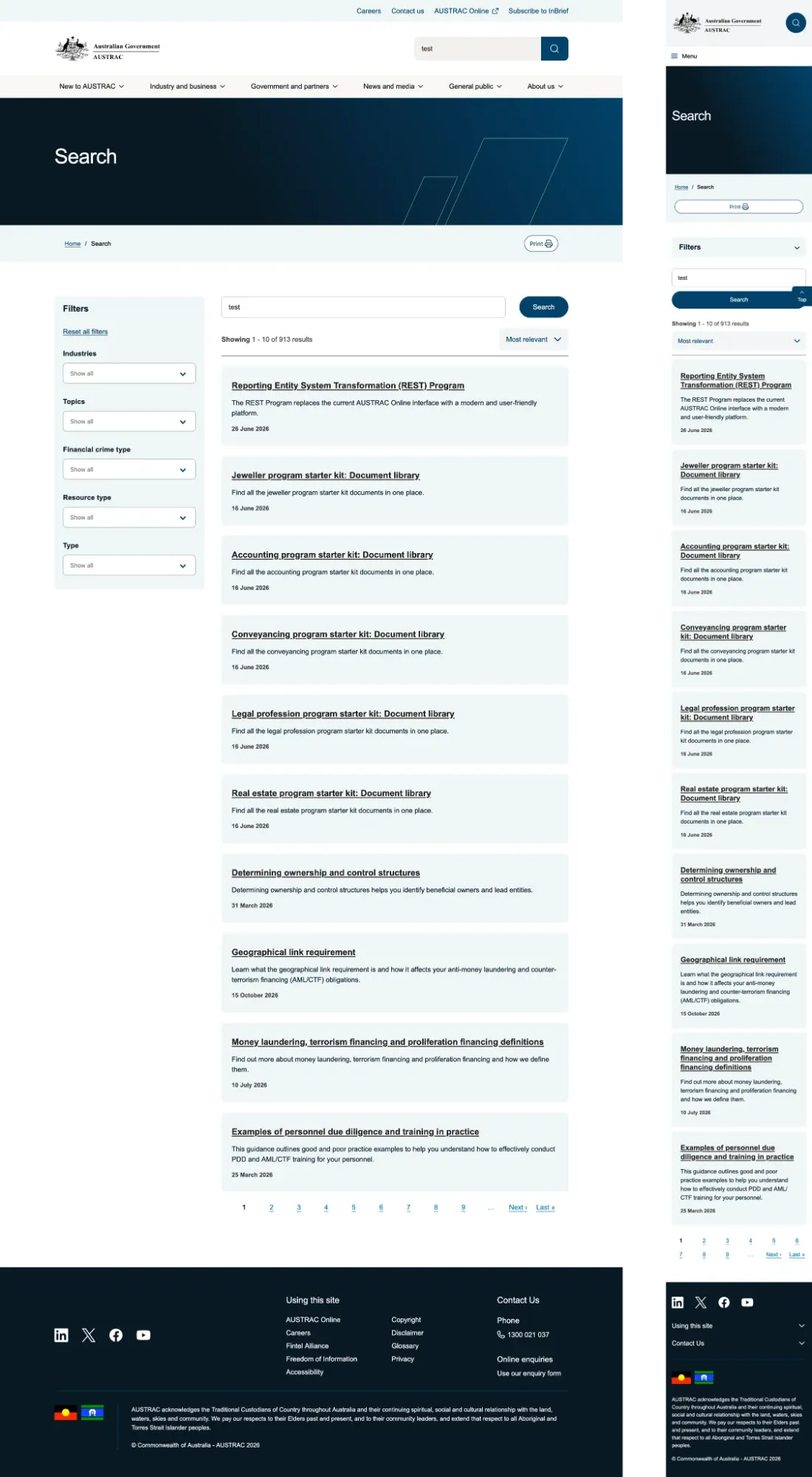
Search was designed to help people narrow down a large library of guidance and resources. Filters for industry, topic, financial crime type and resource type sit alongside clear result cards, sorting and pagination.
4. Building the Design Language System
Alongside the redesign, I created a design language system for AUSTRAC, establishing the foundations, components and patterns used across the website.
This gave the project a single source of truth for design decisions and made it easier to keep new pages consistent as the website grows.
5. Designing for Every Device
Every template was designed to work across desktop, tablet and mobile. Navigation collapses into a simple menu, search filters fold away behind an expandable panel and long guidance pages stay readable on smaller screens.
Solution
The redesigned website brings a clearer structure and a consistent visual language to a large and complex body of content.
Key design contributions included:
- Homepage: Featured updates, popular content by industry, news and events to guide people towards what they need.
- Guidance Pages: Structured templates with section navigation, “On this page” summaries, related pages and related legislation.
- Search: Filtering by industry, topic, financial crime type and resource type, with clear result cards and sorting.
- Responsive Design: Layouts and components that adapt across desktop, tablet and mobile.
- Design Language System: Reusable foundations, components and patterns supporting the entire website.
Outcomes
Easier to Find Information
Clearer navigation, industry-based entry points and improved search give people more direct routes to the guidance they need.
More Readable Guidance
Structured page templates break dense regulatory content into sections that are easier to scan and understand.
Consistent Experience
A single design language across the entire website makes it feel cohesive and predictable from page to page.
Scalable Foundation
The DLS provides a foundation for new pages, content types and future development.
Conclusion
The AUSTRAC redesign was an opportunity to make important regulatory information more approachable for the businesses that rely on it.
Leading the design across the entire website, and building the DLS that supports it, meant thinking about both the big picture and the detail: how people find their way through a large website, and how each component holds up across many different types of complex content.
The project reinforced the value of grounding design in research and testing, particularly when the content is technical and getting it wrong has real consequences for the people using it.