The problem
Geotechnical engineers working underground often have no internet access, but they still need product specifications, installation guides and testing procedures to make safety-critical decisions. That information wasn’t centralised, and there was no single place to request quotes or contact Sandvik reps.
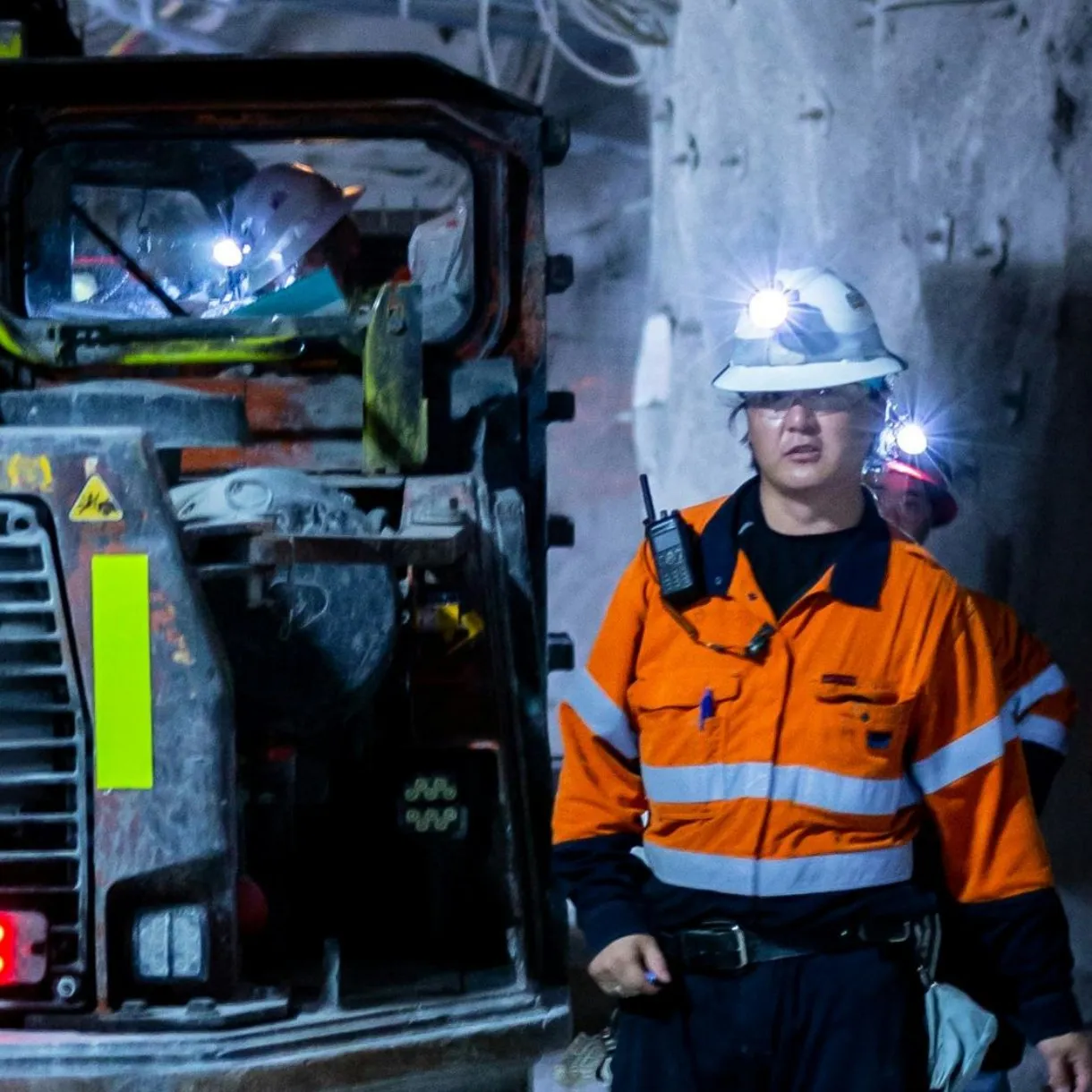
Where the app gets used: underground, often with no signal.
Constraints
- No reliable connection underground, so the app had to work fully offline.
- Sandvik’s customers are spread across 150 countries, with different languages and regulations.
- Engineers use the app in low light, often wearing gloves.
- Sandvik’s content team needed to update content without developers, so content lives in Contentful behind a .NET API on Azure.
Field interviews
I ran 14 interviews with geotechnical engineers, product specialists and mining personnel in Australia and Canada, to understand how they use Sandvik products underground, what information they need most often, and where gaps were affecting safety and efficiency.
Two findings shaped most of the design:
- Engineers prepare at the surface before a shift, then work underground for hours with no signal. Several carried printed spec sheets that were often out of date.
- Calculations for resin and mesh were done by hand or in spreadsheets, then checked again later.
Key decisions
Offline first, not offline as a fallback
Because engineers prepare at the surface, the app syncs everything when there’s a connection and works fully offline underground. Each product shows when it was last updated, so engineers know they’re not working from an old version, which was the problem with printed sheets.
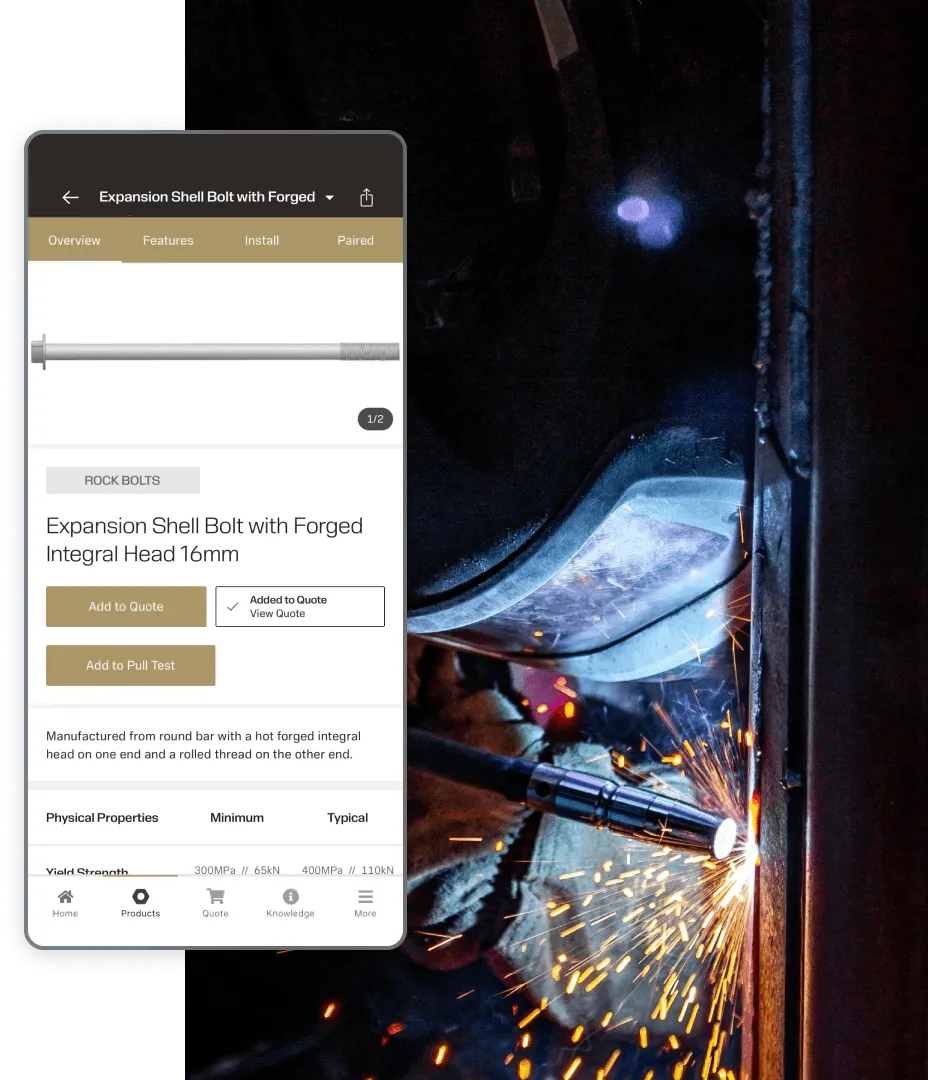
Product page: specs, installation and paired products, available offline.
Build the calculators into the app
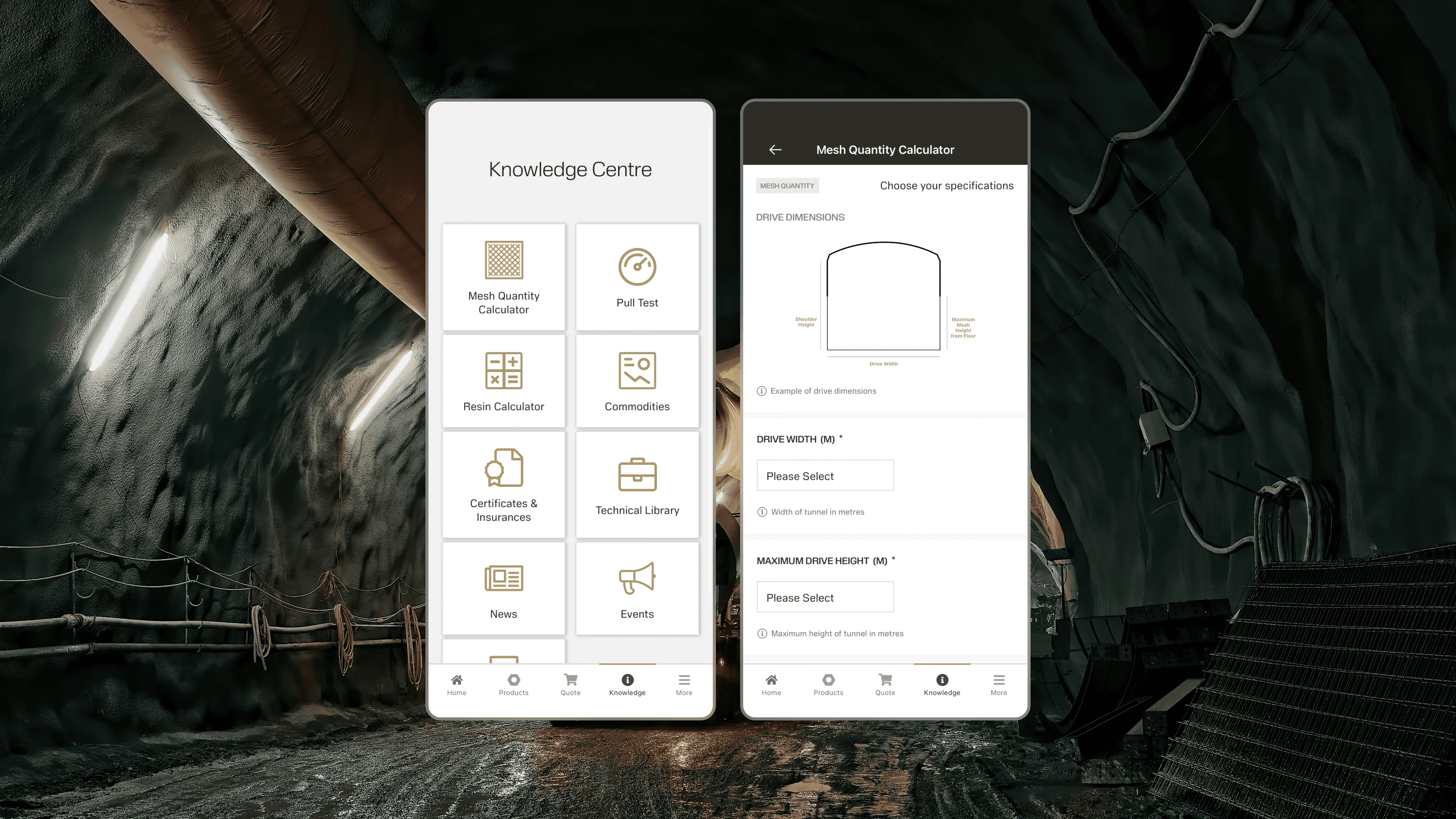
Hand calculations were slow and error-prone, so the resin and mesh calculators are built in, with large number inputs that work with gloves. Results link straight to the products needed and the quote flow.
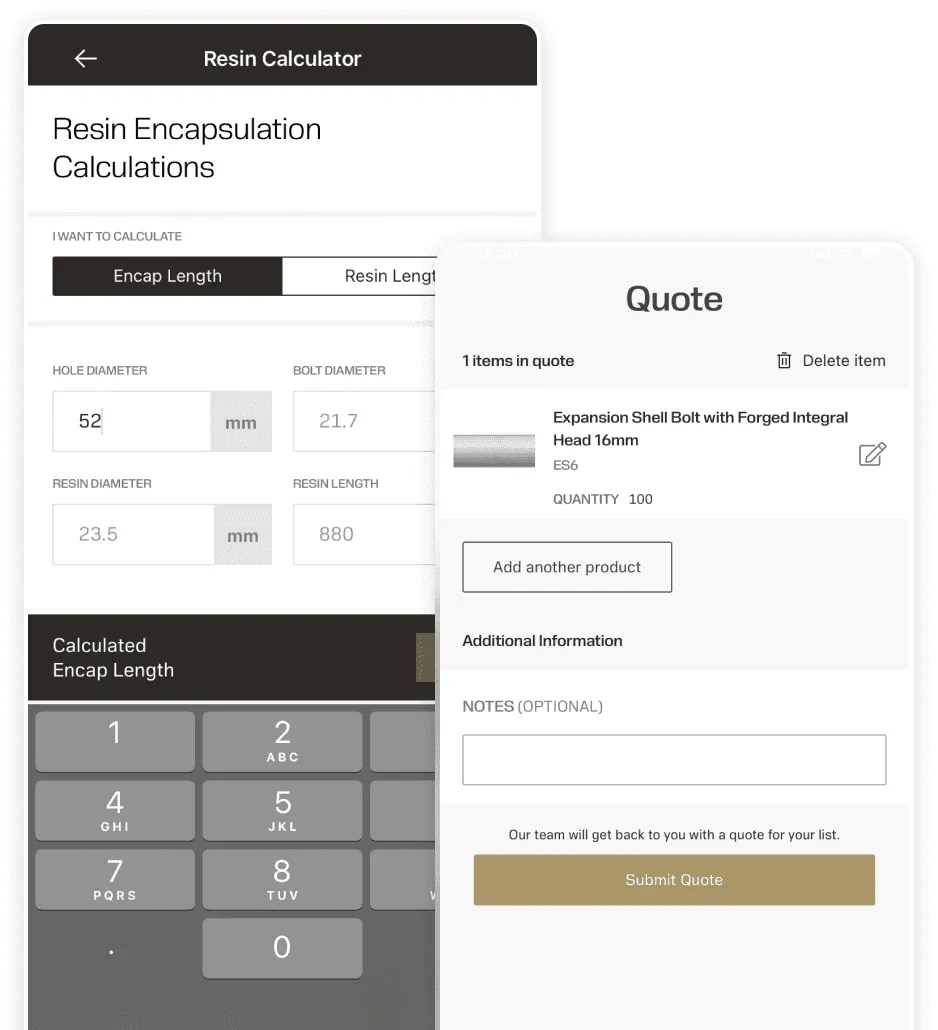
Resin calculator and request a quote.
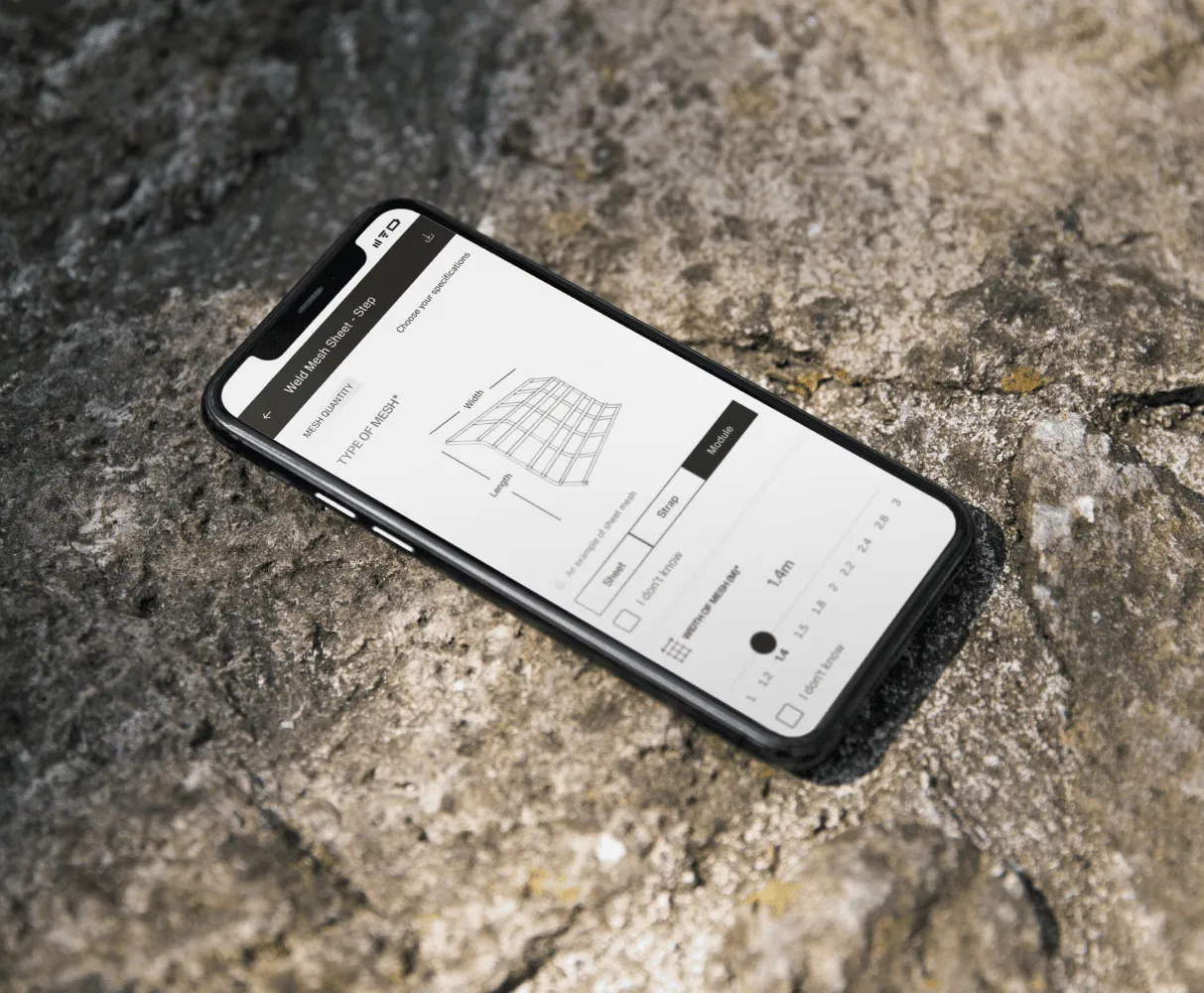
Mesh quantity calculator, designed for use in the field.
Let Sandvik manage its own content
A headless CMS lets Sandvik’s team update products, push news and events, and manage translations across regions without developer support. I designed layouts to allow for text up to 40% longer than English, since some of the 8 languages run much longer.
Accessibility
- Engineers use the app in low light, often wearing gloves, so it uses large tap targets, large number inputs and high-contrast text.
- Calculator fields have visible labels and units rather than placeholder text, and open the number keypad, so it’s always clear what’s being entered.
- Allowing for 40% longer translated text also means layouts hold up when people increase their device’s text size.
Outcome
- Engineers can access up-to-date installation information underground, replacing out-of-date printed sheets.
- Calculators, product information and quotes live in one app instead of separate tools.
- Content is available in 8 languages for Sandvik’s international customers.
- Sandvik’s team manages and localises content in-house.
Reflection
The interviews changed the brief. We started out designing an online product catalogue. The field work showed it needed to be a reliable offline tool first. Next time I’d also interview the people who order the products, since quotes were often requested by someone other than the engineer.